
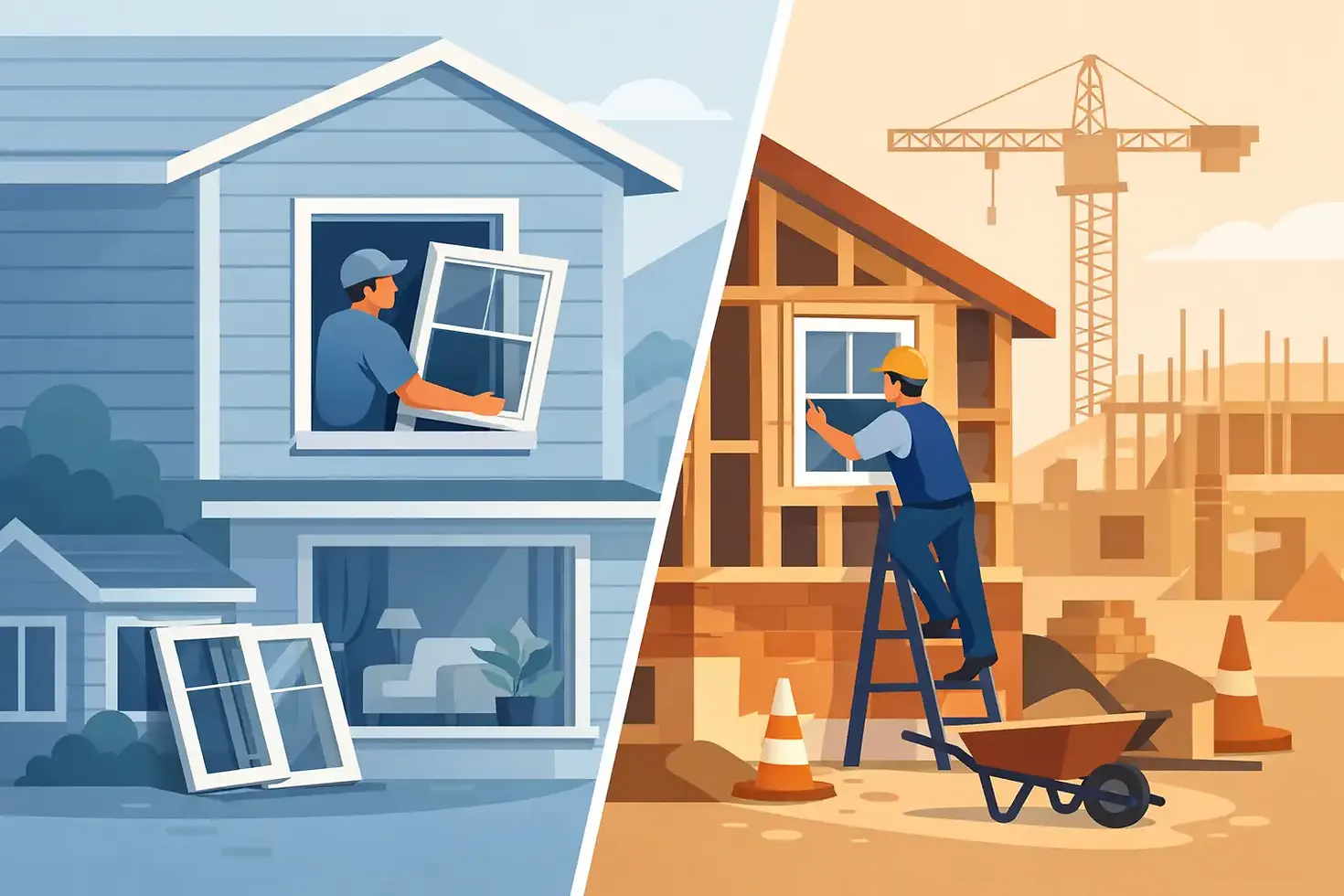
Replacement Windows vs New Construction
- WindowAndDoorCenter
- May 28
- 6 min read
If you are weighing replacement windows vs new construction, the real question is not which option is better in general. It is which one fits the condition of your home, the goals of your project, and the level of performance you expect for years to come.
That distinction matters more than most homeowners realize. Two window options can look similar once installed, yet the path to get there, the construction involved, and the long-term results can be very different. For Michigan homes in particular, where wind, moisture, seasonal swings, and energy demands are part of daily life, the right choice starts with understanding how each system works within the wall.
What replacement windows vs new construction really means
A replacement window is designed to fit into an existing window opening without removing the surrounding exterior materials and, in many cases, without removing the original frame completely. The old sash and operating components come out, and the new window is installed within the existing frame. This approach is often called an insert replacement.
A new construction window is installed with a full frame, typically including a nailing fin or another attachment method that integrates with the wall system. It is commonly used in brand-new homes, additions, and major remodels, but it also makes sense when an older home has frame damage, water intrusion, or a larger redesign planned around the opening.
The difference is not cosmetic. It affects labor, trim work, insulation strategy, water management, sightlines, and sometimes even the amount of glass you will have after installation.
When replacement windows are the right choice
Replacement windows are often the best fit when the existing frame is in good condition and the goal is to improve comfort, efficiency, and appearance without opening up the wall. If the home does not have structural damage around the opening and you are not changing the size or shape of the window, replacement can be an efficient and attractive solution.
This route appeals to many homeowners because it is typically less disruptive. Interior finishes often remain intact. Exterior siding or brick usually does not need to be removed. Installation can move more quickly, which helps on occupied homes where minimizing disturbance matters.
For premium renovations, replacement windows can still deliver a strong design result. Modern products offer excellent performance, cleaner operation, and refined interior finishes. If your primary issue is draftiness, aging components, poor energy performance, or dated aesthetics, replacement windows may solve the problem without expanding the project unnecessarily.
That said, replacement windows do come with limits. Because the new unit fits inside the existing frame, you may lose a small amount of visible glass area. In some homes, that reduction is minor. In others, especially where the original frame is bulky, it can be more noticeable.
When new construction windows make more sense
New construction windows are the better choice when the project involves deeper changes to the wall, the opening, or the exterior envelope. If you are building a custom home, adding square footage, replacing damaged framing, or changing window sizes, this is usually the correct path.
They are also worth considering when there are signs of rot, water infiltration, or long-term failure around the existing window. In those cases, installing an insert into a compromised frame may only hide the underlying problem. A full-frame approach gives the installer access to the rough opening so issues can be identified and corrected before the new unit goes in.
This is where performance and project quality often separate. A properly executed new construction installation allows for better integration with flashing, weather-resistant barriers, and insulation details. That can be especially valuable in climates where wind-driven rain, freeze-thaw cycles, and temperature swings test every part of the building envelope.
There is also more design freedom. New construction windows make it easier to enlarge openings, alter proportions, coordinate new trim details, or match a broader remodeling vision. For architects, builders, and homeowners pursuing a more transformative result, that flexibility is often worth the added scope.
Cost, disruption, and value
Cost is one of the main reasons homeowners compare replacement windows vs new construction in the first place, and the answer is rarely as simple as a price per unit.
Replacement windows usually cost less in both labor and materials because the installation is more contained. There is less demolition, fewer finish repairs, and less coordination with other trades. If the existing conditions are sound, this can be a smart investment with meaningful gains in comfort and efficiency.
New construction windows generally come with a higher upfront cost. The added work may include removing exterior cladding, rebuilding damaged areas, updating flashing, and restoring interior or exterior finishes. On paper, that can make replacement seem like the obvious value.
But value depends on what your house actually needs. If the original frame is deteriorated or poorly installed, choosing a lower-scope option may simply postpone a larger repair. In that situation, the more comprehensive installation can protect the home better and reduce the risk of future issues.
A premium window should not be judged by product alone. The right package includes the correct installation method for the opening, the design intent, and the condition of the home.
Performance in Michigan homes
In Michigan, window decisions need to account for more than curb appeal. Winter comfort, condensation control, summer sun, air infiltration, and moisture management all influence how a home feels and performs.
Replacement windows can improve energy efficiency significantly, especially in homes with outdated or failing units. Better glass packages, tighter seals, and stronger operation can reduce drafts and create a more stable indoor environment.
New construction windows offer an additional advantage when the surrounding wall assembly needs attention. If air leaks or moisture issues are tied to the opening itself rather than just the old sash, full-frame installation creates an opportunity to rebuild that assembly correctly.
This is one reason experienced project guidance matters. The window is only one part of the system. The flashing details, insulation, attachment method, and fit within the wall all contribute to long-term durability and comfort.
How to decide between replacement windows and new construction
The best decision usually comes down to four factors: the condition of the existing frame, whether you are changing the opening, the level of finish disruption you can tolerate, and the performance goals of the project.
If the frame is solid, the opening is staying the same, and you want a more streamlined upgrade, replacement windows are often the logical choice. If there is hidden damage, a major remodel underway, or a desire to rethink the architecture of the elevation, new construction windows are often the better investment.
This is also where homeowners and trade professionals sometimes approach the question differently. A homeowner may focus first on budget and visual impact. A builder or architect may be more concerned with rough opening conditions, sequencing, and long-term envelope performance. Both perspectives are valid, and the right recommendation should account for both.
A showroom conversation or site evaluation can often clarify the answer quickly. Once someone looks at the condition of the existing units, the trim details, and the wall interface, the correct path becomes much easier to identify.
Common misconceptions about replacement windows vs new construction
One common assumption is that new construction windows are only for new homes. They are not. They can be the right solution in remodeling work when the opening needs to be rebuilt or redesigned.
Another is that replacement windows are always a shortcut. That is also not true. In the right conditions, they are a precise, high-value solution that can deliver excellent performance and a refined finished look.
There is also a tendency to assume that the product brand determines success more than the installation method. In reality, even an exceptional window can underperform if the application is wrong for the opening. Product quality and installation strategy have to work together.
Choosing with confidence
Window projects go more smoothly when the decision is grounded in the home itself rather than in a one-size-fits-all sales pitch. Some openings call for the efficiency of replacement. Others deserve the full reset that new construction provides.
For design-focused renovations and custom residential work, the goal is not simply to get new windows in place. It is to create lasting comfort, clean sightlines, dependable performance, and a finished result that feels right in the architecture of the home.
If you are deciding between the two, start with the existing conditions and the bigger vision for the project. The right answer should support both. That is where confidence begins, and where a better result usually follows.


Comments