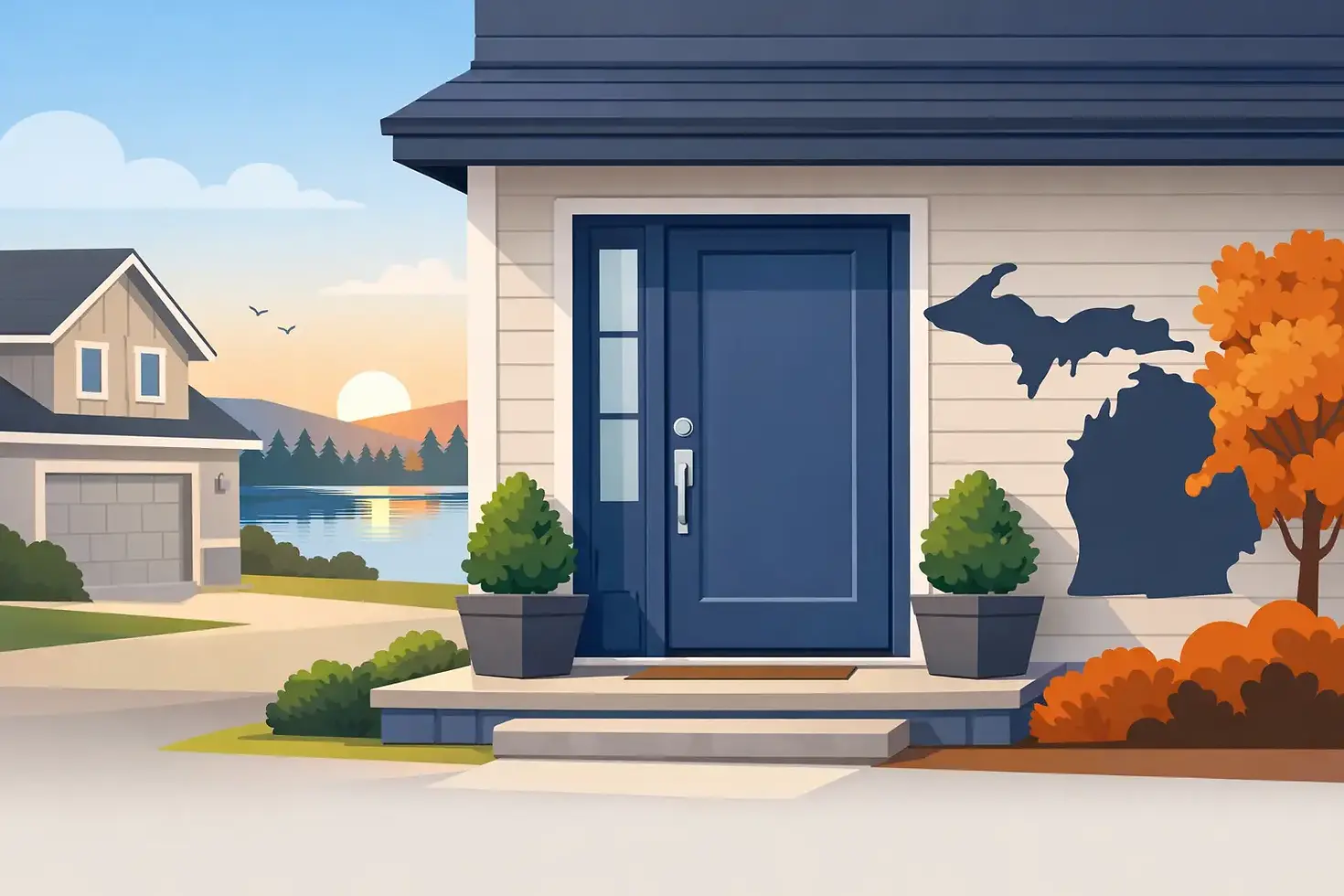
Fiberglass Entry Doors Michigan Homes Need
- WindowAndDoorCenter
- May 2
- 6 min read
A front door has to do more in Michigan than make a good first impression. It has to handle lake-effect snow, wind-driven rain, summer humidity, sharp temperature swings, and daily use without losing its shape, finish, or fit. That is why fiberglass entry doors Michigan homeowners choose are often the ones that balance design flexibility with serious long-term performance.
For many homes, the front entry is where aesthetics and function meet most visibly. You notice it every day. Guests notice it immediately. And if the door is drafty, hard to latch, or showing wear too soon, you feel that decision every season. Fiberglass has become a leading option because it answers several needs at once - durability, insulation, lower maintenance, and a wide range of design possibilities.
Why fiberglass entry doors fit Michigan so well
Not every material performs the same when the climate is demanding. Wood remains beautiful, but it requires more upkeep and can be more vulnerable to expansion, contraction, and finish wear over time. Steel offers strength, but it can dent, and in some applications it does not offer the same warmth or design range that many homeowners want at the front of the home.
Fiberglass occupies a valuable middle ground. It is engineered for durability, resists many of the common issues that come with moisture and seasonal movement, and can be built to support strong thermal performance. In practical terms, that means a door that can help maintain indoor comfort while standing up to weather exposure with less maintenance than many traditional alternatives.
That does not mean every fiberglass door is equal. Construction quality, core insulation, glass package, weatherstripping, sill design, and installation all matter. A premium fiberglass system should be evaluated as a full entry package, not just as a slab with an attractive finish.
What to look for in fiberglass entry doors Michigan buyers are considering
The first question is usually appearance. Homeowners want an entry door that complements the architecture of the house, whether that means clean contemporary lines, a classic paneled look, or a more substantial craftsman profile. Fiberglass is especially appealing here because it can offer a refined painted finish or a convincing wood-look texture without asking for the same maintenance schedule as real wood.
The second question should be performance. In a climate with cold winters and humid summers, insulation values matter, but so does air infiltration. A well-built door with quality seals and precise installation can make a noticeable difference in comfort near the entry. If you have ever stood by a front door in January and felt cold air at your feet, you already know the value of getting the details right.
Glass is another important consideration. Decorative glass, sidelites, and transoms can transform an entry and bring in natural light, but they should be chosen with privacy, efficiency, and exposure in mind. A beautiful glass design on a sheltered front porch may be a very different choice than one used on a fully exposed entry facing winter winds.
Security also belongs in the conversation. Fiberglass doors can support secure hardware and strong multi-point locking options, but the strength of the overall system depends on more than the material alone. Frame quality, hardware, and installation all contribute to how the door performs over time.
Design matters just as much as durability
A premium front door should not feel like a compromise between performance and style. It should improve the way the home looks from the street and the way the entry feels from inside. That is especially true in higher-end renovations and custom homes, where the front door often sets expectations for the entire project.
Scale is one of the most overlooked design decisions. A door that is too small, too plain, or poorly proportioned can make even a well-designed exterior feel unfinished. In contrast, a properly scaled entry with the right width, glass layout, and finish can bring balance to the facade and add a sense of permanence.
Color and finish also deserve careful attention. Dark finishes can create a sophisticated look, but sun exposure may influence what is practical in certain conditions. Lighter painted finishes can feel timeless and work well across many architectural styles. Wood-look fiberglass can be an excellent solution for homeowners who want warmth and character without committing to the maintenance demands of a natural wood entry.
For builders, architects, and designers, this is where product breadth matters. The best results come from selecting a door system that can meet both the design intent and the performance requirements of the project, rather than forcing one priority to give way to the other.
The difference between a good door and a good entry system
A common mistake is focusing only on the door panel itself. In reality, long-term satisfaction depends on the entire opening. The frame, threshold, weatherstripping, glass, hinges, finish, and hardware all work together. If one part is underbuilt or poorly installed, the performance of the whole system can suffer.
This is why project guidance matters. A homeowner may be comparing finishes and panel styles, while a builder may be thinking about rough openings, schedules, and field conditions. Both concerns are valid. The best results happen when product selection and technical coordination are aligned early.
In Michigan projects, exposure is especially important. A protected front entry under a deep overhang gives you more flexibility than a door facing direct weather with little shelter. That does not mean fiberglass is only for harsh exposures. It means the right specification depends on the context. Sill design, finish choice, glass type, and maintenance expectations should all reflect how the entry will actually be used.
Replacement versus new construction
The right door for a remodel is not always specified the same way as one for a new build. In replacement work, the condition of the existing opening, surrounding trim, and threshold details can affect what is possible and what will deliver the cleanest result. Sometimes the best-looking door choice on paper requires more site work than expected. Other times, a carefully chosen replacement system can dramatically improve both curb appeal and comfort without extensive reconstruction.
For new construction, there is more flexibility to coordinate the entry with the architecture from the start. This is where larger openings, matching sidelites, transoms, and custom proportions can make a meaningful impact. It is also the best stage to think through how the front door relates to the rest of the window and door package, so the home feels cohesive rather than pieced together.
Whether the project is a renovation or a custom home, clarity early on saves time later. That is one reason many homeowners and trade professionals value a design-focused partner that can speak to aesthetics, specifications, and installation realities in the same conversation.
Why premium selection and local expertise matter
On paper, many doors can appear similar. In person, the differences become clearer. Sightlines, finish quality, hardware feel, panel depth, glass detailing, and overall fit all influence whether an entry feels ordinary or truly considered. For a front door, those differences matter because this is one of the most touched, most visible, and most symbolic products in the home.
Local expertise matters for a simpler reason - climate and field experience shape better recommendations. A product that performs well in a mild environment may not respond the same way here. Teams that understand regional weather patterns, installation conditions, and homeowner expectations are better positioned to guide the right specification from the beginning.
That is part of the value of working with an established project partner such as Marvin Design Gallery by Laurence Smith. The right support is not just about showing products. It is about helping homeowners, builders, and design professionals make decisions that hold up visually and technically over time.
Choosing with confidence
If you are comparing fiberglass entry doors, start with the realities of your project. Consider the architectural style of the home, how exposed the entry is, how much light and privacy you want, and what level of maintenance fits your expectations. Then look closely at the complete system, not just the surface appearance.
A front door should feel substantial, operate smoothly, insulate well, and look right for the home year after year. When those pieces come together, the result is more than curb appeal. It is comfort at the threshold, confidence in the investment, and an entry that feels built for where you live.
Choose the door that will still make sense after the first winter, the fifth season of daily use, and the moment you step back and see the house feel complete.


Comments